




Quality & innovation
Learn about our quality & innovation
United States

Merz Therapeutics is focused on becoming a global leader in specialty neurology, with a strong and growing presence in the United States.
Across neurology, many conditions require highly specialized care. Some are rare, some difficult to treat and others too often overlooked — but all can have a profound impact on patients’ quality of life.
In the U.S. and beyond, Merz Therapeutics concentrates its expertise where needs are greatest, advancing life-changing therapies for people living with complex neurological conditions.

Our specialization in neurology brings us closer to the experiences of people building lives, families, careers and connections while managing a complex medical condition.
Our partnerships with the clinicians and advocates who care for this community give us a clear understanding of how therapy can help — and how we can adapt to meet evolving needs.
We work closely with stakeholders across the entire neurology community to ensure that our therapies have the greatest possible impact throughout the U.S. and beyond.
In 2024-2025 we:

Led 19 hands-on medical education courses

Trained 350 healthcare professionals

Advanced scientific engagement through 31 abstracts/posters and 6 accepted manuscripts
Through our existing treatments today, and further innovations tomorrow, Merz Therapeutics is committed to improving the quality of life for patients with neurological disorders.
We are already helping patients in a wide variety of neurological settings:
Parkinson’s disease is one of the most common diseases of the central nervous system. Well-known symptoms include tremors, slow movement, stiffness and instability. There are other non-movement-related symptoms too, that can occur before the visible onset of disease. These differ in severity and rate of development from patient to patient. With early diagnosis and treatment tailored to individual needs, it is possible to alleviate symptoms and significantly improve quality of life.
Parkinson’s disease is mainly caused by the death of dopamine-producing cells. Reduced dopamine leads to an excess of glutamate, and the resulting imbalance can cause impaired control of movement.
In the context of Parkinson’s disease, “OFF episodes,” as well as dyskinesia, will occur in most patients over the course of disease progression. Initially, oral levodopa alone or in combination with carbidopa, the most used Parkinson’s disease medication, works in a defined treatment regime. During the progression of Parkinson’s disease, the effectiveness of levodopa will diminish, and the dose, as well as the number of medication intakes, need to be adjusted. The term “OFF episodes” refers to the times when medications no longer provide full benefit, and symptoms return in different severities. Levodopa inhalation powder is an on-demand drug to treat “OFF episodes.” Inhalation is effective for people who need rapid relief from symptoms that cannot be achieved with oral administration.
The treatment of Parkinson’s disease aims to maintain patients’ independence in the family, work and society for as long as possible. Restoring a patient’s quality of life is achieved by preventing the need for care and avoiding concomitant diseases and further complications.
Therapy options aim to reduce the glutamatergic predominance and to improve Parkinson’s disease symptoms in the long term. Amantadine, as a glutamate antagonist, compensates for the neurotransmitter imbalance in the brain of Parkinson patients. Furthermore, the prophylaxis and therapy of dyskinesia throughout all stages of Parkinson’s disease (L-dopa-induced dyskinesia) should be focused during treatment. In clinical practice, the amantadine tablets with a dopamine-agonistic effect represent a possible (mono) therapy option for the early phase of Parkinson’s.
Amantadine – as an established dopamine agonist – can support neurological function in vigilance and drive disorders. As an infusion, amantadine is considered an adjunct to standard treatment for patients with moderate to severe traumatic brain injury and disorders of consciousness to enhance cognitive function, concentration, processing time, psychomotor speed and decreased fatigue. Other concomitant conditions resulting from severe traumatic brain injury such as spasticity also require further treatment.
Multiple Sclerosis (MS) is a chronic neurological disease characterized by inflammation, demyelination and degenerative changes in the central nervous system. The wide range of MS symptoms include limb weakness, gait problems, vision problems, sensory disturbances, fatigue, cognitive loss and nerve damage.
MS seriously impacts overall quality of life of those affected. Physical symptoms can limit nearly every aspect of daily life, which has further consequences on social and mental wellbeing.
In Multiple Sclerosis, the protective coating around nerve fibers gets damaged. When these parts are exposed, it becomes harder for nerves to send signals properly. The drug dalfampridine helps by blocking the exposed parts of the nerve. This allows electrical signals to travel more easily along the damaged nerves. Dalfampridine can help with some MS symptoms, particularly those related to walking and movement, by improving how nerves send signals.
In some people with Multiple Sclerosis, weakened bladder control can lead to stress urinary incontinence (SUI). Calcium hydroxylapatite particles help by adding volume at the bladder neck and/or urethra, creating a bulking effect that helps the urethra close more effectively during activities that increase abdominal pressure. As an injectable implant, it is a non-permanent and minimally invasive option for long-lasting SUI relief.
Dystonia is a neurological movement disorder in which involuntary muscle overactivity causes abnormal posture and body movement. It affects every age group and can affect different body parts – particularly the head, neck and limbs – in multiple ways.
Cervical dystonia patients will often experience involuntary neck muscle contractions.
A dystonia patient will often experience symptoms focused on just one area; for example spasm of the eyelid, or a rotated neck.
BOTULINUM NEUROTOXIN
Botulinum neurotoxin to block overactive muscles or glands
Botulinum neurotoxin is a very complex substance produced by bacteria. Botulinum neurotoxin attaches itself exclusively to nerve cells that activate the muscular system or specific glands – effectively and accurately blocking an overactive muscle or gland. The effect is reversible after a certain period of time (depending on dosage and injection location), so that repetition of the injection is typically necessary.
Spasticity refers to damage to parts of the central nervous system (CNS) that control muscle activity, which causes spasms. Spasticity is often a result of external trauma, such as injury to the brain or spinal cord.
Symptoms and severity of spasticity depend on which parts of the CNS are affected, and to what extent. But all symptoms lead to a degree of functional impairment (such as the ability to use hands or move freely) which can have profound impact on everyday life.
BOTULINUM NEUROTOXIN
Botulinum neurotoxin to block overactive muscles or glands
Botulinum neurotoxin is a very complex substance produced by bacteria. Botulinum neurotoxin attaches itself exclusively to nerve cells that activate the muscular system or specific glands – effectively and accurately blocking an overactive muscle or gland. The effect is reversible after a certain period of time (depending on dosage and injection location), so that repetition of the injection is typically necessary.
Sialorrhea is an uncontrolled excess of saliva; either because saliva is produced to excess or cannot be cleared. The most common symptom is constant drooling. Sialorrhea can cause skin infections and rashes, and even lead to aspiration pneumonia, a potentially life-threatening lung infection.
More commonly, drooling uncontrollably can have serious social consequences, as embarrassment leads people with Sialorrhea towards social withdrawal.
Sialorrhea often occurs in people who experience Parkinson’s disease, stroke, or traumatic brain injury.
Botulinum neurotoxin is a very complex substance produced by bacteria. Botulinum neurotoxin attaches itself exclusively to nerve cells that activate the muscular system or specific glands – effectively and accurately blocking an overactive muscle or gland. The effect is reversible after a certain period of time (depending on dosage and injection location), so that repetition of the injection is typically necessary.
Glycopyrrolate inhibits the action of acetylcholine on salivary glands, thereby reducing the extent of salivation. As an oral solution, it can be administered up to 3 times daily in children aged 3 to 16 years old.
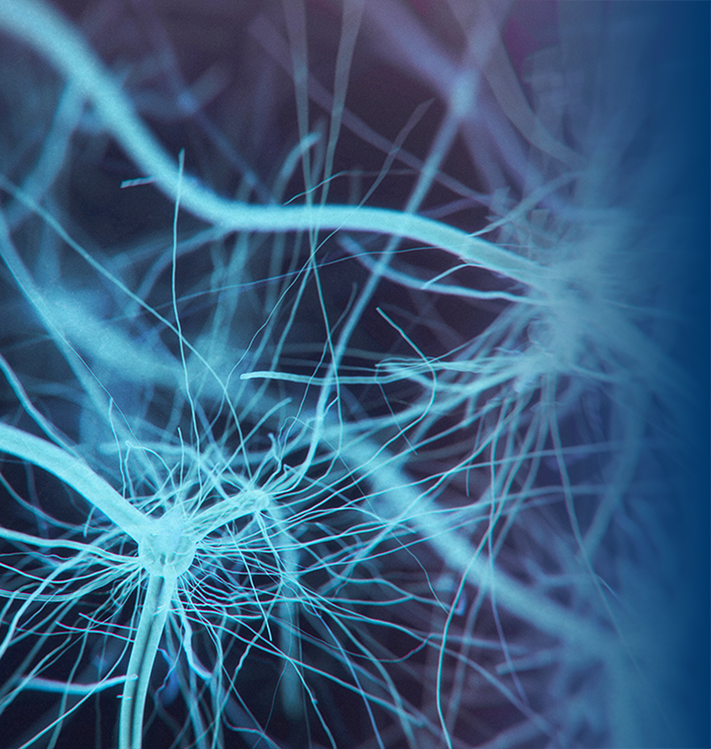
Access to care can be complex — especially for people living with chronic neurological conditions. In the U.S., navigating insurance coverage, treatment options and long-term care often requires additional support beyond the clinic.
Merz Therapeutics is committed to helping patients and caregivers better understand their options and connect with appropriate resources.* Across our neurology portfolio, we work to support access through patient-focused programs, educational materials and collaboration with healthcare professionals as well as patient advocates.
While availability and coverage may vary, our goal is to help ensure that patients prescribed Merz Therapeutics treatments are not navigating their journey alone.
*Patients should always speak with their healthcare provider to determine the most appropriate treatment and support options.

You are leaving this website. With respect to the content of the following page, as well as to links to other websites located on this page, Merz Therapeutics U.S. has no way of controlling the content of these sites. Merz Therapeutics U.S. assumes no responsibility for the content of these sites or the consequences of their use by visitors. However, we ask you to notify us immediately of any illegal content on the linked sites.
You are leaving this website. The content of the following sites maintained by the parent company or another affiliated company, or links to other sites located on this site, is subject to the legal requirements of the country in which the site is maintained. Merz Therapeutics U.S. accepts no responsibility whatsoever for the content of these websites or for the consequences of their use by visitors. However, we ask you to notify us immediately of any illegal content on the linked sites.